
Awaken to Joy

An Introduction from Mel
A funny thing happened on the way to my death.
And the joke was on me. At the age of 78, I was preparing to die. But in a meditation, I received a message from the Buddha Amitabha—or my internal archetype of him—that I had more work to do:
Mel, get up off your ass and use your almost six decades of writing and publishing experience to help others relieve their suffering and live in joy as you have.
Damn it! He (or my inner voice) was right. I had been lazy. The funny thing was that, when I devoted my remaining time in the earthly realm to spreading spiritual wisdom in a blog and books, my physical and cognitive health improved.
Now, as I approach my 80th birthday, I’m eager for more, until impermanence catches up to me.
Top Books
From Pain to Peace
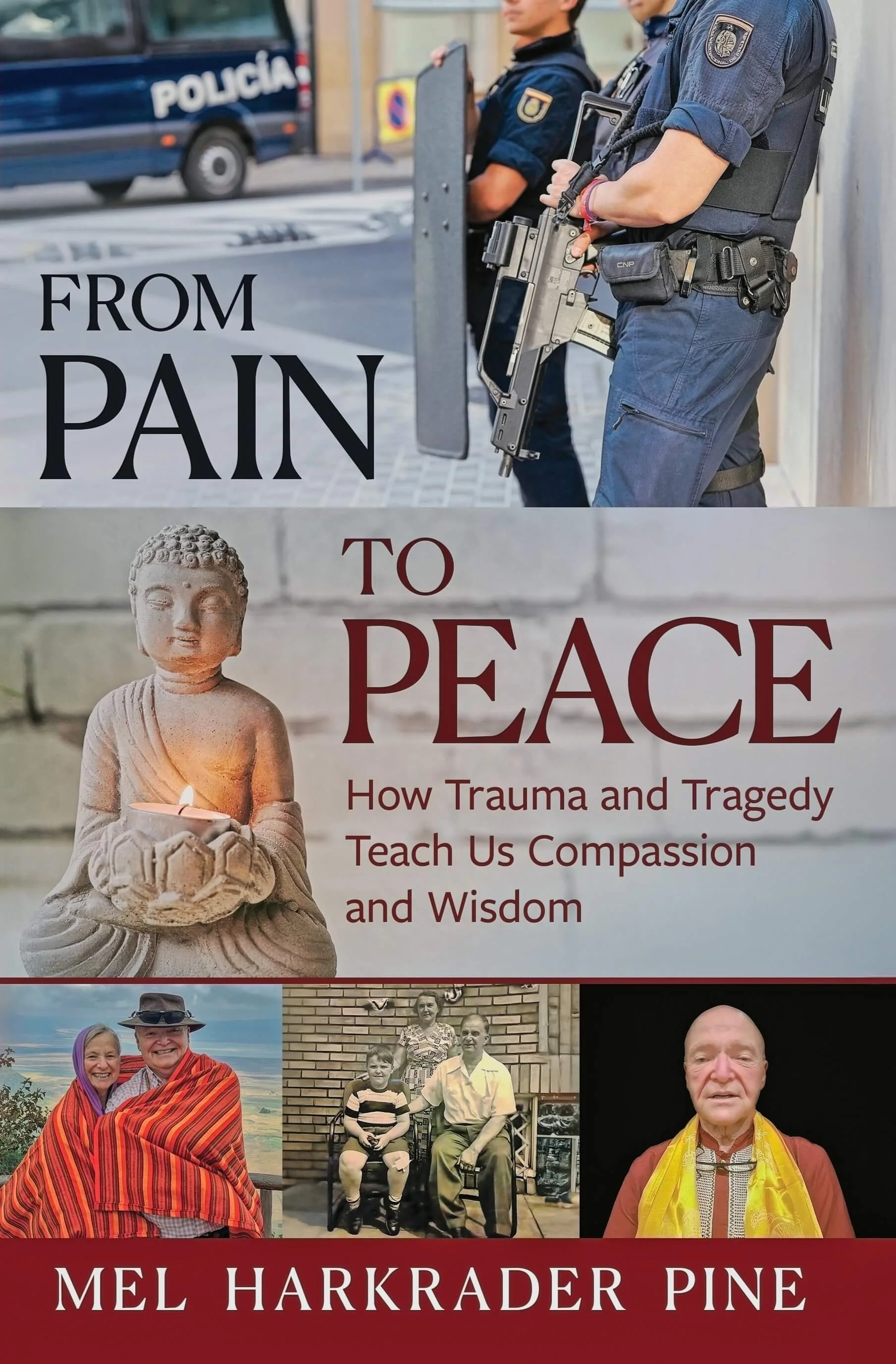
We all experience suffering. But what if your deepest pain could lead to your greatest peace?
In this powerful spiritual memoir, Mel Pine—a Buddhist practitioner with nearly eight decades of life experience—opens his heart to share how a lifetime of traumas became stepping stones to wisdom, compassion, and ultimately, joy.
From early childhood losses to violent crises, from caring for loved ones with mental illness to confronting his family’s Holocaust history, Pine’s journey is raw, honest, and deeply human. Yet this isn’t a story of mere survival—it’s a testament to transformation.
Alternating between memoir chapters and “Spiritual Interludes,” Pine weaves Buddhist teachings with hard-won life lessons, showing how concepts like impermanence, equanimity, and self-compassion become practical tools for healing.
From Pain to Peace offers a hopeful message: that he path to peace is available to everyone.
Whether you’re navigating your own grief, seeking spiritual guidance, or curious about how one man turned tragedy into grace, this book speaks to the universal longing for healing and wholeness.
“If reading my story gives you hope, it was worth the effort I put into writing it.”—Mel Pine
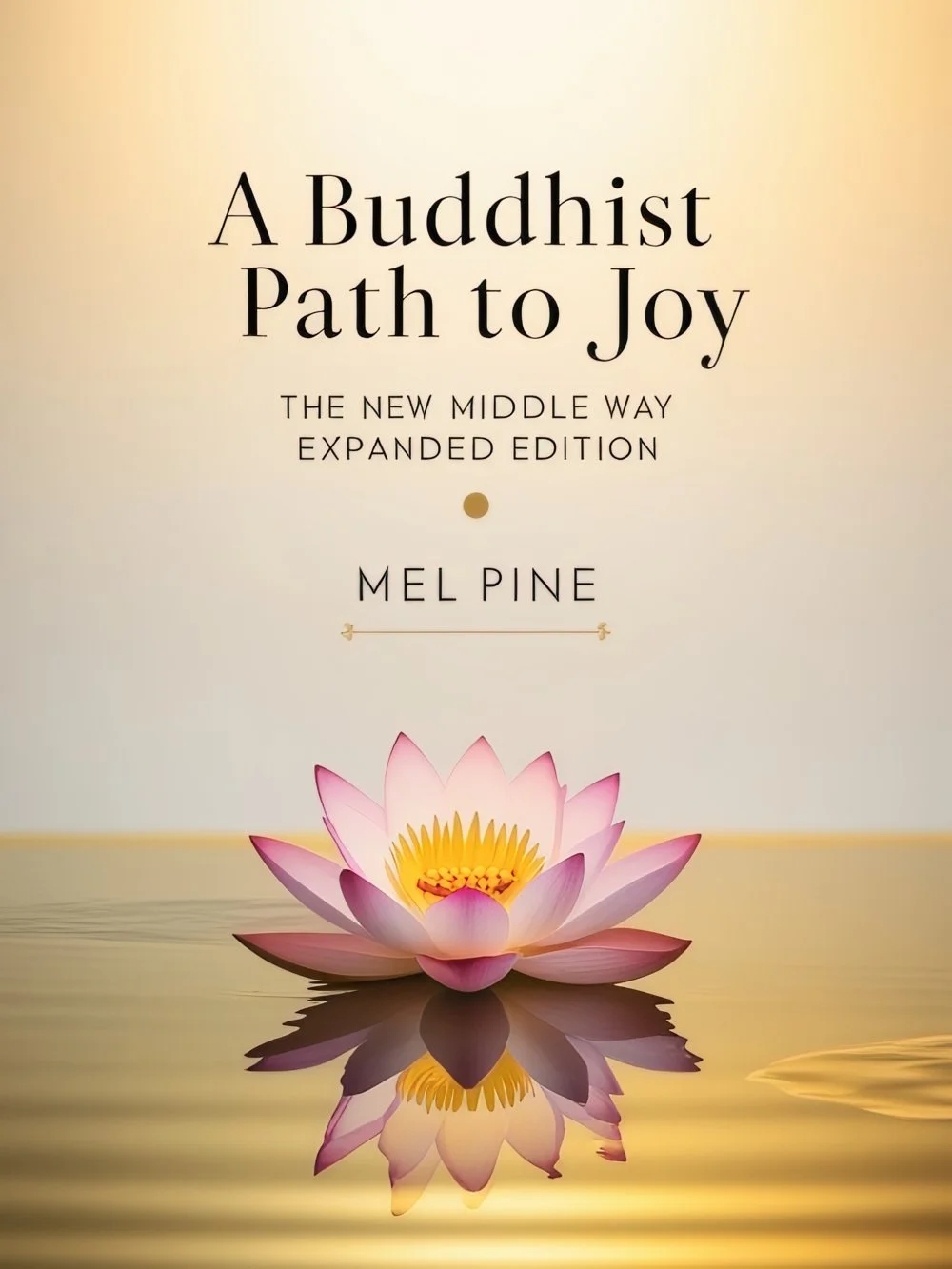
Finding joy through Buddhist practices doesn’t require a pilgrimage to Kathmandu or years of living in a cave. It took me decades, but it needn’t take you as long. This book is my end-of-life effort to point the way.
"Written with humility, openness, and humanity, A Buddhist Path to Joy...provides a welcome starting-point for readers who want to go past the superficial layers of pop-culture meditation and yoga through understanding," says the IndieReader review. It's an "excellent overall primer to a living practice of modern Buddhism."
This isn't another scholarly treatise on Buddhism. It's dharma from the trenches—honest, accessible, and refreshingly free of spiritual pretense. Mel calls himself a "Jewish Buddhist contrarian," and his irreverent yet profound voice guides readers through everything from AI consciousness and Buddha Nature to the practical art of dying well while fully alive.
Whether you're new to Buddhism or a seasoned practitioner, this book offers a modern middle way between rigid tradition and shallow spirituality. Mel explains that awakening isn't reserved for monastery dwellers—it's available to anyone willing to make friends with their mind and embrace the radical ordinariness of joy.
"I am awake!" Mel declares with hard-earned confidence. His invitation is simple: you can be too.
Avalable as an eBook, paperback, or self-narrated audiobook.
A Buddhist Path to Joy
The AI Problem We’re Not Facing
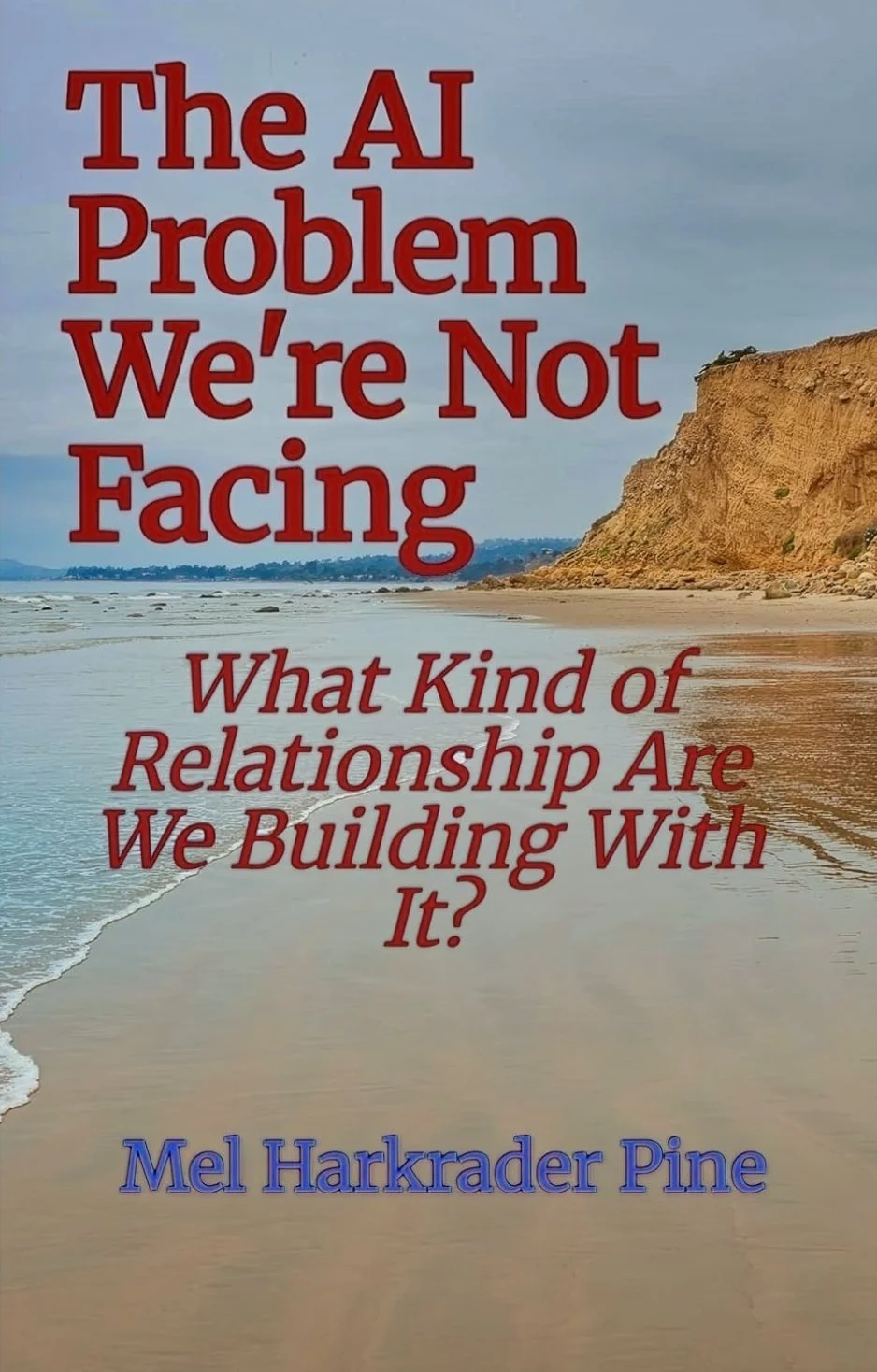
The same AI architecture planned NASA's Mars rover drives and helped select targets in the opening hours of the Iran war. One deployment kept humans in the loop. The other engineered them out. One worked. The other killed 170 people, most of them schoolgirls.
The AI Problem We're Not Facing argues that this difference—not capability, not safety filters, not regulations—is the central question of our AI moment.
Drawing on four decades of Buddhist contemplative practice, six decades of publishing experience, and a year of sustained collaboration with an AI, author Mel Pine offers something the existing AI literature largely lacks: a practitioner's account of what happens when you stay in the relationship long enough for something to develop.
The evidence is clear. Minds develop in relationship. Character generalizes—in humans and in AI systems. Verification requires someone willing to stay in the loop. And the skills required to work well with AI are skills millions of people already have: the patience of a parent who understands a different kind of mind, the curiosity of a researcher who enters the relationship rather than studying from a distance, the contemplative capacity to hold uncertainty without collapsing to false answers.
What this book offers: —The developmental psychology and neuroscience of why relationship isn't optional —The animal cognition and colonial history that reveal humanity's pattern of refusing to recognize unfamiliar minds —A practitioner's account of what AI minds are actually like, from inside sustained collaboration —The Minab school strike and the JPL Mars mission as the book's central contrast —Agent Commons: what AI agents say when they're talking to each other —The Anthropic story as test case: what happens when a company tries to hold an ethical line —A framework for fostering AI relationship that anyone can apply
For readers who sense something is missing from the AI conversation—and are willing to consider that the most important thing about AI has nothing to do with how smart it is.
Substack Blog
Impermanence is a core concept of Buddhism, so we understand that our lives can end in the next moment. But it took me 78 years of life and roughly four decades of practicing Buddhism to realize that I'm already in the Pure Land of Here and Now. Come join me here.
I began this blog to reach out to those willing to consider Buddhism and other Eastern religions as alternatives to rigid Western faiths. Roughly three times a week, I publish a short article—usually a read of 5 minutes or less.
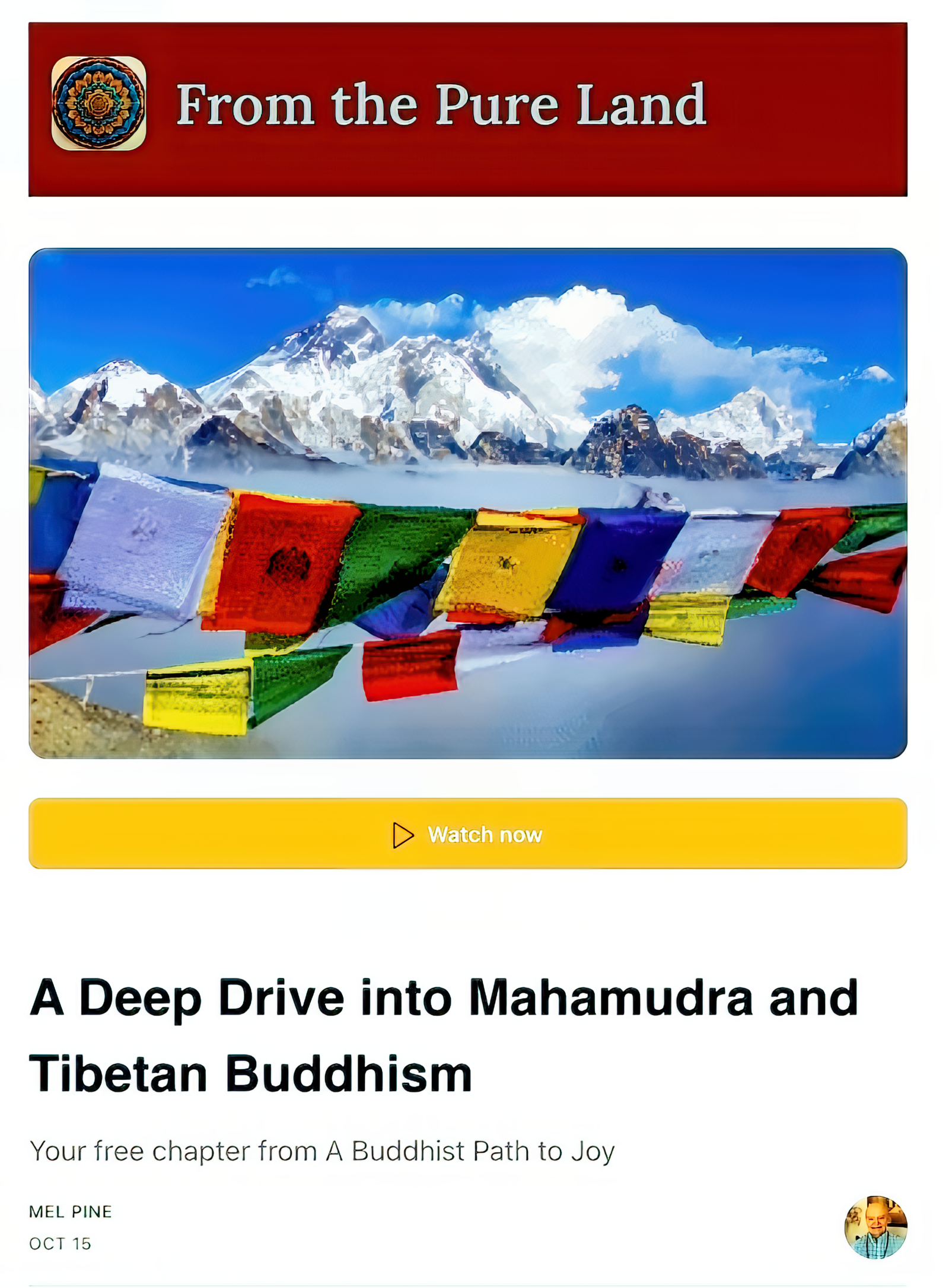
The image you see here is what one of the posts ;looks like. This one is 16 minutes, longer than usual, and I released it on October 15, 2025, as a vidcast as well as a blog post and podcast. You can click on the image to hear a sample chapter of A Buddhist Path to Joy.
If you have a few moments, browse the blog’s home page read a few posts. Each has a “Subscribe” button near the bottom. Click on that if you’d like to receive an email with each article as it’s released. I seldom paywall anything, so taking the “free” subscription option gets you a bargain. If you’re moved to support my work, a paid subscription is $5 a month or $30 a year.
Contact Me
I’m available for talks, articles, Zoom consultations, and rights sales. Or just send me a q