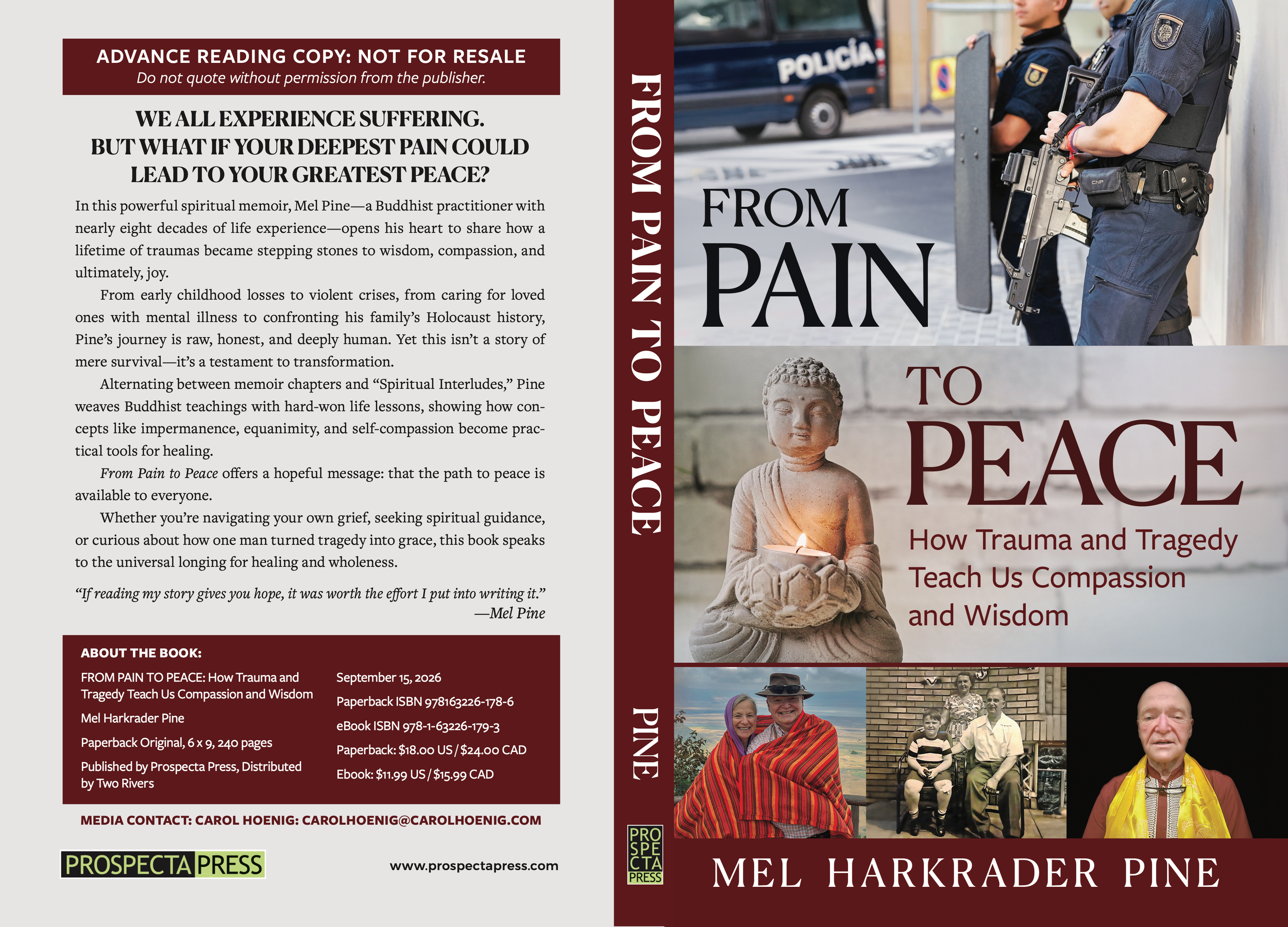
We all experience suffering and trauma, though the circumstances that deliver the differ for each of us. Some of us never recover from the pain; some barely recover; many recover stronger. In this book, I use my trauma-punctuated life as an illustration of the spiritual gifts that tragedies bring. They help us deepen our compassion and wisdom.

They have enabled me to live the final stage of my life in joy. That you’re reading or listening to this Introduction demonstrates the universality of pain as well as the desire to find a path to something better. We will never escape losses and traumas, but we can find in our pain a path to peace and spiritual wholeness.

Although the circumstances that deliver suffering may be expected life events, such as the death of a parent or a child’s departure from home, they often sink us for a time under a wave of sadness. Other circumstances that deliver pain come without warning—a phone call announces the violent death of a loved one; a terrorist bomb explodes fifty yards away from us. We call it trauma when the resulting pain feels too great to handle.

Paradoxically, in the right environment, the deeper the suf-fering we endure, the further we may go toward spiritual whole-ness. Losing our innocence, our support systems, our loved ones, and maybe even some of our memories leaves a void longing to be filled. If we begin with compassion for ourselves and then summon compassion for others, we can fill the void with love.

If that sounds too new-agey for you, it comes from someone whose life has been punctuated by violent and gritty crises. But don’t take my word for it. Here’s a quotation from a Roman Cath-olic professor of spiritual formation about a moment of clarity that came to him after hours of hallucinations and violence as he was locked in the padded cell of an asylum: “I was but a tiny molecule of a boundless sea that holds, without judgment or distortion, all things in the reflection of its unequivocal love.”

***

Whatever caused pain for you, readers, however slowly or abruptly it came over you, whether via the spiritual path you follow or lack of one you can acknowledge your own suffering and ultimately let it help you toward peace—what some might call a state of grace.

I was moved to write this book because the unusually large number of traumas I’ve been through, along with my experi-ences of psychotherapy and spiritual practice, have taught me how to live in joy. If reading my story gives you hope, I feel it will have been worth the effort I put into writing it! If it also serves as impetus or support for your spiritual path, even better.