From Pain to Peace
Chapter 1: Early Lessons in Impermanence
Listen to the audiobook or read the text below.
Early Lessons in Impermanence
Minnie, get my slippers!
From the carpeted floor, the dog, a black-and-white rescue, bigger than a Chihuahua but smaller than a terrier, sprinted up the stairs. She returned in minutes and dropped my Uncle Eddie’s slippers at his feet. At seven, I was astounded, but not enough to get me over my fear of dogs.
A graphic representation of Minnie delivering slippers in a 1950s-era living room
Minnie wasn’t named for her size but for the Cab Calloway song “Minnie the Moocher,” which had sold more than a million copies twenty years earlier. Along with Yiddish, midcentury pop music served as a language in my extended family, which consisted of my maternal grandmother, her five children, and their families, all of us living in Philadelphia.
Bubbe was the only one of my grandparents who had lived long enough for my birth. On this winter Sunday, my father drove her, my mother, and me in his 1951 Chevrolet Bel Air to visit Uncle Eddie’s family in the Oak Lane neighborhood.
You could call Eddie the patriarch of the Pinsky family. Although not the oldest, he was the most successful of Bubbe’s children in the “new country.” He lived in the nicest house, had the best career, and considered the jazz clarinetist Benny Goodman a friend. His wife, Margaret, was fashionable—at least by Jewish-immigrant standards. Eddie was an imposing figure: tall, good-natured, kind, and warm. He cried at bar mitzvahs.
Uncle Eddie and Aunt Margaret had three children. Carl and Martin were six and five years older than me. Barry was the closest I had to an age-mate in the family tree, just five months older. With more social grace than I had, he invited me to play with him in the basement, where Martin, more of a loner, had built a cardboard fort in one corner. Barry and I weren’t allowed to touch Martin’s place of retreat and refuge.
Barry had his mother’s artistic bent and tried to help me draw, but it was hopeless. In later years, he won a scholarship to the Philadelphia College of Art. To this day, I can’t even sign my name clearly.
My father, known in the new country as Jack, had immigrated in 1921. My grandmother, known in the new country as Dora, came here with her husband, Morris, around the turn of the twentieth century. They came from shtetls (Jewish settlements) in the Prushin-Shereshov (pronounced prushinashershov) region of what’s now Belarus.
Dvereleah (Dora), born around 1875, grew up in a variation of indentured servitude. Her father, Mortra-Beryl, stayed home studying the Talmud while his wife did her best to sell staples from a pushcart. They couldn’t afford to feed Dvereleah, so they gave her to a family with a disabled son. She cared for the boy and got to eat his leftovers.
I knew nothing about that when Bubbe was a member of the household. She moved in with us when I was born—to care for the yingele (young one), so called because I was the youngest on my branch of the family tree. My brother, Stanley, known as Ginger because of his hair color, was fifteen when I was born, and my sister, Marilyn, eleven. Because my mother, Fannie, felt overwhelmed and embarrassed to have a child at nearly forty, my Yiddish-speaking grandmother became a key caregiver.
A story I never heard is how Dvereleah met her husband in the old country. They must have been lonely souls. Both had been cast off from their families. Dvereleah’s parents couldn’t afford to feed her. Maishe-Yudel (Morris), as best I can tell, was an extramarital son of Shalom Yisrael Pinsky. He bore the Pinsky name but was not accepted into the family.
As an eyewitness told me, Maishe-Yudel and Dvereleah lost a child to starvation before they immigrated to the United States. Once here, Morris gave Dora five children and otherwise spent his time drinking himself to his death, which came in 1926 before he turned fifty.
Dora and her children—Sophie, then twenty-three; Harry, twenty-two; Fannie, nineteen; Eddie, thirteen; and Izzy, eleven—all made it through the Great Depression.
My father, called Yankel in the old country, was born in the same region in 1898. His father was prosperous until pogroms, wars, and military occupations led to famine and starvation. Jack didn’t live long enough to share with me why and how he made the journey from Prushin-Shereshov to New York City. My research a half century after his death determined that before he left, he saw German soldiers chain his father to a plow to grow crops to feed troops on the Eastern Front of the First World War.
Jack Pine soon after his arrival in the US
In 1921, Jack left to join three or four siblings who were already here. I don’t know how long his parents lived. The brother and sister he left behind tidily married a brother and sister from the Kantorowitz family. In October 1942, the Nazis shot Jack’s sister, brother-in-law, and their three children to death as they hid in an apartment. The following year, his brother, sister-in-law, and their two children were taken by cattle car to Auschwitz-Birkenau, where they were killed. When I was born in 1946, I had lost two uncles, two aunts, and five cousins to genocide.
I haven’t mentioned my paternal grandfather’s name. It’s Shalom Yisrael Pinsky, my maternal great-grandfather. I’ve heard no explanation of how it happened, but after Jack immigrated, he visited the half brother their father had disowned and married his daughter Fannie in 1926. So I have only one side to my family—Pinsky—except that shortly after his arrival, a relative advised my father to take a less-Jewish-sounding name. So Yankel Yussel Pinsky became Jack Pine before he married my mother.
Jack and Fannie’s first child, Martin, lived only a year and died in 1930. Ginger was born in 1931 and Marilyn in 1935. The family moved from New York to Philadelphia to be closer to Bubbe and save on expenses by sharing a house with relatives. They were content with their family of four, and during this period my mother developed some, well, frigidity and prudishness. Then a long-distance call in August 1945 stirred some excitement. “Ruthie had her baby, a boy. Come see him!”
My father’s sister in New York City was announcing that her grandchild Bobby had been born. Jack and Fannie left Ginger and Marilyn with the Philadelphia relatives, hopped into my father’s car, and drove to see the baby. They didn’t pack condoms, and I guess the joy of Bobby’s birth got my mother over her coldness.
Few people know the reason they were born. I’m one of them.
The science of epigenetics is fundamentally changing how we understand inheritance. The word means “above” or “on top of” genetics. Your personal DNA sequence stays the same. You’re not getting new genes or changing existing ones. Instead, chemical tags get attached to your DNA or to the proteins that package it. These tags act like dimmer switches, turning genes up or down without changing the underlying code.
The classic example is the Dutch Hunger Winter of 1944-45. Nazi forces blockaded the western Netherlands, creating a famine that killed about twenty thousand people. Pregnant women who lived through it gave birth to children with higher rates of obesity, diabetes, and heart disease—not surprising, given the prenatal malnutrition. But their grandchildren, born decades later to well-fed mothers, showed similar health issues. The trauma of starvation had marked multiple generations.
While it takes many generations for our genetic structure to change in response to our environment, the regulation of genes can shift because of experience, and those regulatory changes can sometimes be inherited. This happens in feast as well as famine.
Research in Swedish historical records found that if a male child experienced feast conditions right before puberty, then later had children and grandchildren, his grandsons would face increased mortality rates from cardiovascular disease and diabetes. If he faced famine during that same developmental window, his grandsons lived longer. The timing mattered—puberty, pregnancy, and early childhood seem to be critical windows when environmental conditions can leave lasting marks.
Animal studies have made this even clearer. Researchers can breed mice that are genetically identical—clones, essentially—yet that show wildly different traits, depending on what their mothers or grandmothers experienced. Stress, diet, toxins, even how much a mother mouse licks her pups—many factors can create epigenetic changes that affect behavior and health across generations.
Most epigenetic marks get erased between generations. If they didn’t, every generation would carry the accumulated baggage of every ancestor’s experience. But some marks slip through, particularly those established during critical developmental periods.
Studies of Holocaust survivors and their children suggest that trauma can leave epigenetic adaptation signatures. Researchers found altered stress hormone regulation in the children of survivors, particularly those whose mothers were pregnant during the Holocaust. The sample sizes are small and the findings debated, but if confirmed, this means that historical trauma may have biological consequences that reach into future regulation of stress hormones as well as metabolic processes.
While I learned early on that the Holocaust had taken lives in my extended family, I didn’t inherit the effects of that in the womb. I did, however, inherit a family history of pogroms and starvation, and possibly even my mother’s ambivalence about my existence.
May 23, 1956—my tenth birthday—came and went without a party or a present. Fannie was hospitalized, recovering from a heart attack, and Jack was barely managing to run the family business. He had spent forty-seven days in the same hospital after a severe attack of his own less than a year earlier.
Three decades later, I began learning core Buddhist concepts, one of which is impermanence. The Buddha put it succinctly: “Whatever has the nature of arising has the nature of ceasing.”
Ajahn Chah, a twentieth-century influential Thai teacher, used this story to illustrate impermanence:
One day some people came to the master and asked: How can you be happy in a world of such impermanence, where you cannot protect your loved ones from harm, illness, or death? The master held up a glass and said: “Someone gave me this glass. It holds my water admirably and it glistens in the sunlight. I touch it and it rings! One day the wind may blow it off the shelf, or my elbow may knock it from the table. I know this glass is already broken, so I enjoy it—incredibly.”
In May 1956, I learned about impermanence.
It’s October 2025 as I write this. My wife, Carol, and I find a series or movie to stream together every evening at seven on our sixty-five-inch smart TV, which hangs on our living-room wall . . . near the Buddhist altar. Tonight it’s something with full-length recordings of classic pop songs.
Toward its end, I hear the dozen rapid piano chords and the falsetto voice of Tony Williams singing “Only you . . .” That R&B crossover hit by the Platters in the 1950s was a favorite of my mother’s. A strange feeling comes over me. It’s warmth toward my mother.
At the show’s end, I sit still. Then I tell Carol, “Hearing that Platters song, ‘Only You,’ moved me.” She replied, “Yeah, wasn’t the music great!”
“I mean something else. My mother loved that song, and it touched something deep in me. I rarely go there, but it was warmth for my mother.”
After more silence, I added: “It’s like that was a symbol of the last bit of happiness in my childhood. The moment just before everything changed. Just before I learned about impermanence.”
On my smartphone, I look up the song in Wikipedia. It was released in May 1955, one month before my father’s first heart attack and one year before my unnoticed birthday.
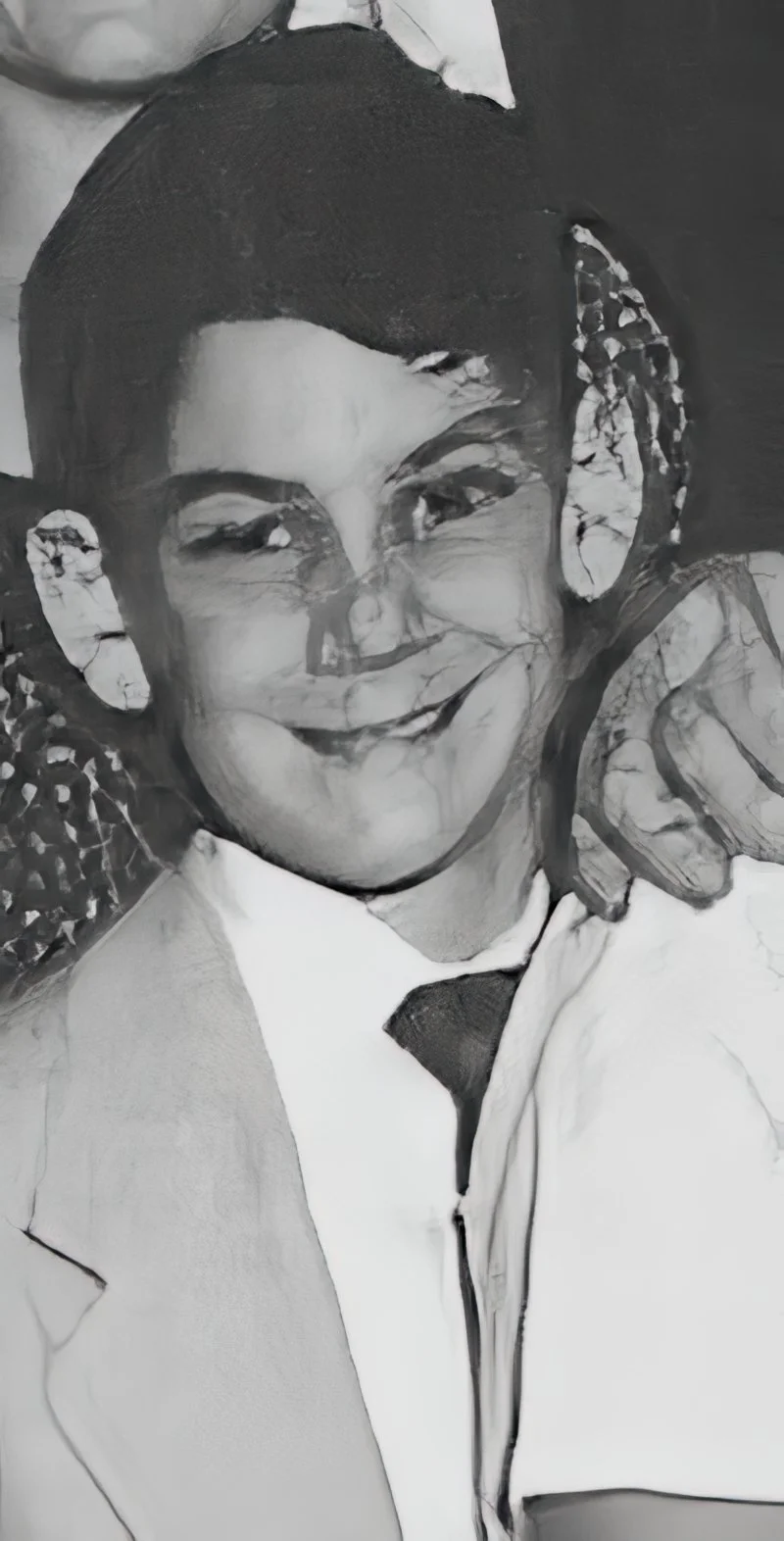
In a family photo taken around the time of the gathering at Uncle Eddie and Aunt Marge’s, my father’s hand rests on my back. My mother is standing inches away, seemingly intent on not making physical contact with either of us. Dad was the source of warmth in my earliest years. Mom and Bubbe were there to feed me and protect me from harm. The warmth came from Dad.
He gave me something else—the gift of not protecting me from the uglier parts of life. When I was five, he’d take me in his truck to make deliveries of the bushels and baskets he sold to farms for their produce. I’d see field hands near-naked in rags. I asked him why the “colored people” always seemed to be poor. “It’s the way they get treated. They work hard. It’s not their fault.”
Once, when Dad’s “colored” truck driver—also named Jack—was arrested, my father took me to visit him in the holding area of a police station. Not long after that, Jack died in prison, and my father drove me to pay our respects to his family in a tenement more chaotic and noisy than any other residential area I have ever entered.
I grew up with a basic understanding of the Holocaust and what it meant to my family and my neighbors. I was four or five when my parents took me to visit the husband-and-wife concentration camp survivors they had sponsored for entry to the United States. I don’t know if that was the first time I saw the tattooed serial numbers on the arms of survivors, but they were a common sight in my neighborhood. I knew what they meant.
Jack Pine, my father, wasn’t very religious and probably knew nothing about Buddhism, yet he had upekkhā, the Pali and Sanskrit word for equanimity. At least, that’s how I remember him from my earliest years. I never heard him speak with anger or prejudice against anyone, including Germans.
Dad had his challenges. Symptoms began appearing that today, for those of us with comprehensive health insurance, might launch testing and preventive treatment for coronary thrombosis. But neither the medical understanding nor the insurance existed seventy years ago. One particularly warm June 1955 morning, Dad’s pain kept him from getting out of bed, and I was hustled out the door to walk the half mile to Creighton Elementary School. When I returned for lunch, he was gone.
An ambulance had taken him to Albert Einstein Hospital, where his condition was critical, and would remain critical for thirty days. It was seventeen more days before the hospital released him and he returned home. I was never taken to visit him in the hospital, so the father who returned was a different sort of being I had to get used to.
Our family house stood at 5107 F Street, near Roosevelt Boulevard, to the southwest of what would become the northeast section of Philadelphia. The two-story brick row house had three bedrooms and a bath on the second floor, and a walkthrough porch, a living room, a dining room, and a kitchen on the first floor. In my youngest years, it housed my parents along with Grandma Bubbe, Ginger, Marilyn, and me.
With my father hospitalized, Fannie needed to run the family business, which was then a booth of perhaps 250 square feet from which we sold phonograph records in what would now be called a flea market. I traveled by bus and subway to buy stock from distributors, and Fannie spent every moment she could by her husband’s side. She told me years later about the lack of attention I received: “You had your whole life in front of you. Daddy was dying.”
Ginger and Marilyn were young adults embarking on their futures. Bubbe, who had been the caregiver to so many, now required care herself. After brief unsuccessful periods living with her other children, they arranged for her to spend the rest of her years—which lasted until 1961—in the Uptown Home for the Jewish Aged. It was a warehouse of people waiting to die.
When visiting Bubbe, I’d walk first through the dining and congregating area in the lobby of the building. Her semiprivate room was on the third floor, with the residents who were unable to get around on their own. As I’d approach the elevators on the far side of the lobby, three or four of the men who hung out there daily would greet me with a hearty “Hello, Governor!” “Hello, Senator!”
Then the slow ride up in the elevator, knowing my grandmother would be in bed or sitting next to it, depressed, and not sure who I was.
On August 7, 1959, as I visited my father’s sister in the Flushing neighborhood of Queens, New York City, an article appeared in that city’s Daily News:
Philadelphia, Aug. 6 (AP)—A former mental patient, released from a mental hospital as not cured but not showing homicidal tendencies, killed two men and wounded four today with volleys of shotgun fire into the crowded dining room of a home for the aged.
The killer was Kyrlo Czupirezuk, 55, an immigrant handyman. He exchanged shots with police and terrorized the crowded neighborhood before he was wounded and captured in his apartment.
He spoke little English and police couldn’t determine the reason for his outbreak.
“I shoot Communists. I don’t shoot police,” he told them. “Police shot me. Communists radiate me. They bother me.”
It was the Uptown Home for the Jewish Aged. I never heard “Hello, Governor!” or “Hello, Senator!” there again.
Because ours was a family without displays of affection, there was no hugging or excitement when my father arrived home from the hospital, then was carried up the outside stairs in a chair just as he had been carried down forty-seven days earlier. He was too weak to use the stairs to the second floor, so we had set up a cot in the living room and a chemical toilet in the dining room.
Seeing him pale and weak was a shock, but worse was his acceptance of helplessness. I didn’t want to watch as Fannie washed Jack’s groin area, but at nine years old, I didn’t have the self-confidence to move from the living-room couch.
Fannie didn’t tell anyone as months went by during which she experienced chest pains. We later learned that she kept a “To whom it may concern” letter in her handbag in case she collapsed somewhere. When her condition became obvious, I think it was Marilyn who took the lead in getting her to the hospital. Her heart condition was not as severe as Jack’s.
Somehow, they kept the record business alive until they managed to sell it, but the hospital bills and mortgage payments never stopped coming. My father was hospitalized again, and then again. On January 30, 1958, during his third hospitalization, our phone rang as I was eating breakfast. My mother seemed worried as she answered it. As I watched her, I witnessed something that I now know can’t be explained physiologically.
I saw her hair turn gray at the temples.
She hung up the phone and belched. That’s what would happen when she was upset. She would belch. “The hospital says Daddy’s taken a turn for the worse, and they said I should get there right away.”
She didn’t know how to drive, so she asked one neighbor to drive her to the hospital and another, Adele, to take me to her house, attached to ours by a party wall. That in itself was a sign that something monumental was going on. I often stayed home alone. I could think of no other time when I was ushered to another house because my mother would be away.
Adele took me to the upstairs rear bedroom in her house and left me alone. No explanation of what was going on. After what seemed like a couple of hours, I peeked out the front window and saw the car that had taken Mom to the hospital. She must be back. Why hadn’t anyone told me?
I remember that it was 11 a.m. when I let myself in through the front door. Other people were in the house, but my mother was standing by the front window with her right hand raised to her chin, her left hand supporting the right elbow. Was she going to say something? Anything? I broke the ice. “Is Daddy dead?”
She said nothing, but her burp answered my question. My father died eighteen days after his sixtieth birthday and 252 days after my eleventh.
Neither she nor anyone else spoke with me about my father’s death. The discussion of it began with my question. . . and ended with a burp.
When I see children these days who are seven or younger, the age I was when playing with Barry (photo) in a row house on Rugby Street in Philadelphia, I feel both admiration for their innocence and dread for what the coming years will bring. It’s a blessing that we’re not born clairvoyant.
I had no clue as to the four years that would lead to my father’s death or that, in the following seven decades, I’d:
Survive a terrorist bombing and a police-initiated riot
Lose two loved ones to a shooting
Lose one to a stabbing
Lose one to a hanging
Lose one to a skateboarding accident
Lose two to an auto accident
Lose one to stubborn refusal of Western medicine
Declare bankruptcy
Be ostracized by a religious community
I also had no clue when I was only seven that every life trauma would widen my heart and bless me with spiritual wisdom; or that I’d:
Grow to believe I have something of value to share with the world
Awaken every day thankful for my past, present, and future
Find spiritual wholeness and a joyful old age through forty years of Buddhist practice
Accept an end-of-life mission from a deity named Amitabha (or perhaps from his archetype within me)
Devote my final days, weeks, months, and possibly years to reducing the suffering of others, which would also reduce my own
In the words of poet Andrea Gibson, who died of ovarian cancer at age forty-nine:
What I have called my biggest wounds have very often been my biggest blessings because of where they led me and because of how often they further opened my heart.
From Pain to Peace: How Trauma and Tragedy Teach Us Compassion and Wisdom is available in paperback, ebook, and audiobook at these outlets.